If you own or are shopping for a 2021 Nissan Leaf, keeping up with recalls isn’t optional, it’s central to safety, resale value, and how confidently you can use Level 3 fast charging. This guide pulls together the latest, confirmed 2021 Nissan Leaf recalls list in one place and explains, in plain English, what each recall means for real‑world driving and for anyone considering a used Leaf.
Quick context
Overview: 2021 Nissan Leaf recalls at a glance
The 2021 Leaf sits at an interesting point in the nameplate’s life. It uses an older CHAdeMO quick‑charge port instead of today’s NACS or CCS standards, and it’s one of the model years swept up in Nissan’s Level 3 fast‑charging battery recall for potential fire risk. On top of that, it shares at least one safety recall with earlier and later Leafs for rearview camera visibility.
Key 2021 Nissan Leaf recall highlights
Safety first
2021 Nissan Leaf recalls list (quick reference)
Exact recall counts can shift as Nissan and the National Highway Traffic Safety Administration (NHTSA) expand or refine campaigns. But for a 2021 Leaf, this is the core recalls landscape you’re likely to see when you run a VIN check.
Primary recalls impacting 2021 Nissan Leaf
High‑level view of the major recall campaigns that include 2021 Leaf models. Always confirm details with an official NHTSA VIN lookup or Nissan dealer before taking action.
| Recall name / campaign | Model years covered | Main component | Risk if not repaired | Typical owner instructions |
|---|---|---|---|---|
| R25C8 – Level 3 quick‑charge battery overheating | 2021–2022 (with Level 3/CHAdeMO quick charge port) | High‑voltage lithium‑ion battery software | Battery overheating during DC fast charging; in rare cases, potential fire risk | Stop using Level 3 DC fast charging until software remedy is installed by a dealer. |
| Rearview camera / back‑up display visibility | 2018–2022 Leaf (various trims, including 2021) | Back‑up camera and infotainment display | Camera image may not display correctly, reducing rear visibility and increasing backing‑up crash risk. | Visit dealer for software and/or hardware update to restore consistent rear camera operation. |
| Minor software/electrical campaigns (TSBs or regional campaigns) | Selected 2020–2024 Leafs | Instrument cluster, defroster logic, other electronics | Annoyances or compliance issues (fogged rear glass, warning lights) more than direct crash risk. | Get updates applied during a regular service visit; some show as recalls, others as service campaigns. |
Use this as a roadmap, then verify specifics for your individual VIN.
Terminology check
Battery overheating & Level 3 fast‑charging recall (R25C8)
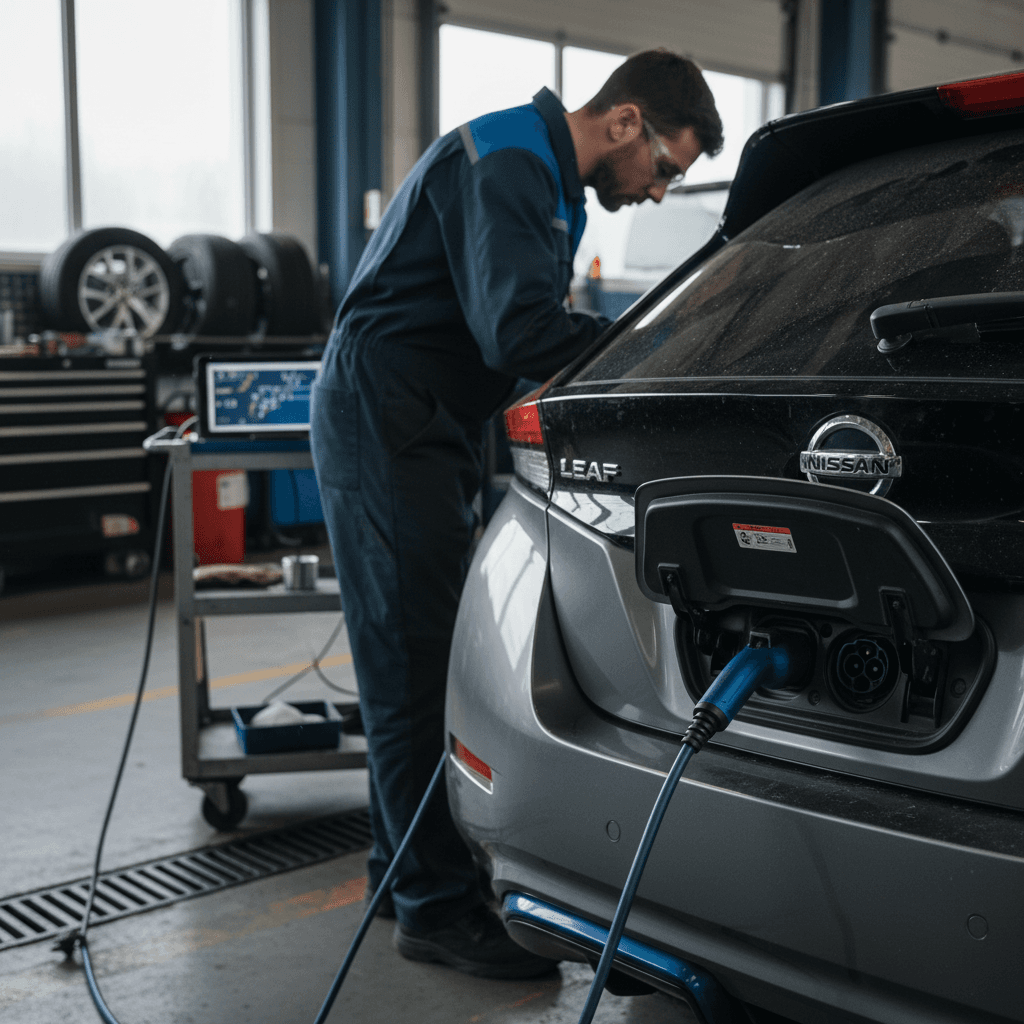
The most serious item on the 2021 Nissan Leaf recalls list is a lithium‑ion battery recall often referenced by Nissan’s internal code R25C8. It targets specific 2021–2022 Leafs built with a Level 3 quick‑charge (CHAdeMO) port. Under certain conditions, battery software can allow the pack to overheat during DC fast charging, increasing the risk of a thermal incident or fire.
- Applies only to Leafs with the optional Level 3 quick‑charge port (CHAdeMO), not Level 2–only cars.
- Covers 2021 Leafs built roughly from November 3, 2020 through mid‑2021, with final dates defined by Nissan in the recall paperwork.
- Includes both 40 kWh and 62 kWh battery packs when equipped with the affected port and software.
Nissan’s interim guidance has been clear: if your Leaf is part of this recall, you should avoid Level 3 DC fast charging until the remedy is installed. In practice, that means sticking to Level 1 (120‑volt) or Level 2 (240‑volt) charging at home and public stations.
What’s actually being fixed?
The core problem is software logic in the Leaf’s lithium‑ion battery controller. Under specific high‑stress conditions, such as repeated DC fast charging, the system may not manage cell temperatures and internal faults conservatively enough. The recall remedy is a software update to the battery management system that tightens protections and is designed to prevent the pack from ever entering a condition where a thermal runaway or fire could occur.
Charging behavior may change
Does every 2021 Leaf fall under this recall?
No. The recall applies to a defined slice of 2021 production based on build dates and hardware. Two quick rules of thumb:
- If your 2021 Leaf does not have the CHAdeMO quick‑charge port, this Level 3 recall likely isn’t listed for your VIN.
- If your car was built outside the affected date window, it may not be covered even if it has the port. Only an official VIN lookup can confirm this.
Don’t ignore this one
Rearview camera recall on 2018–2022 Leafs
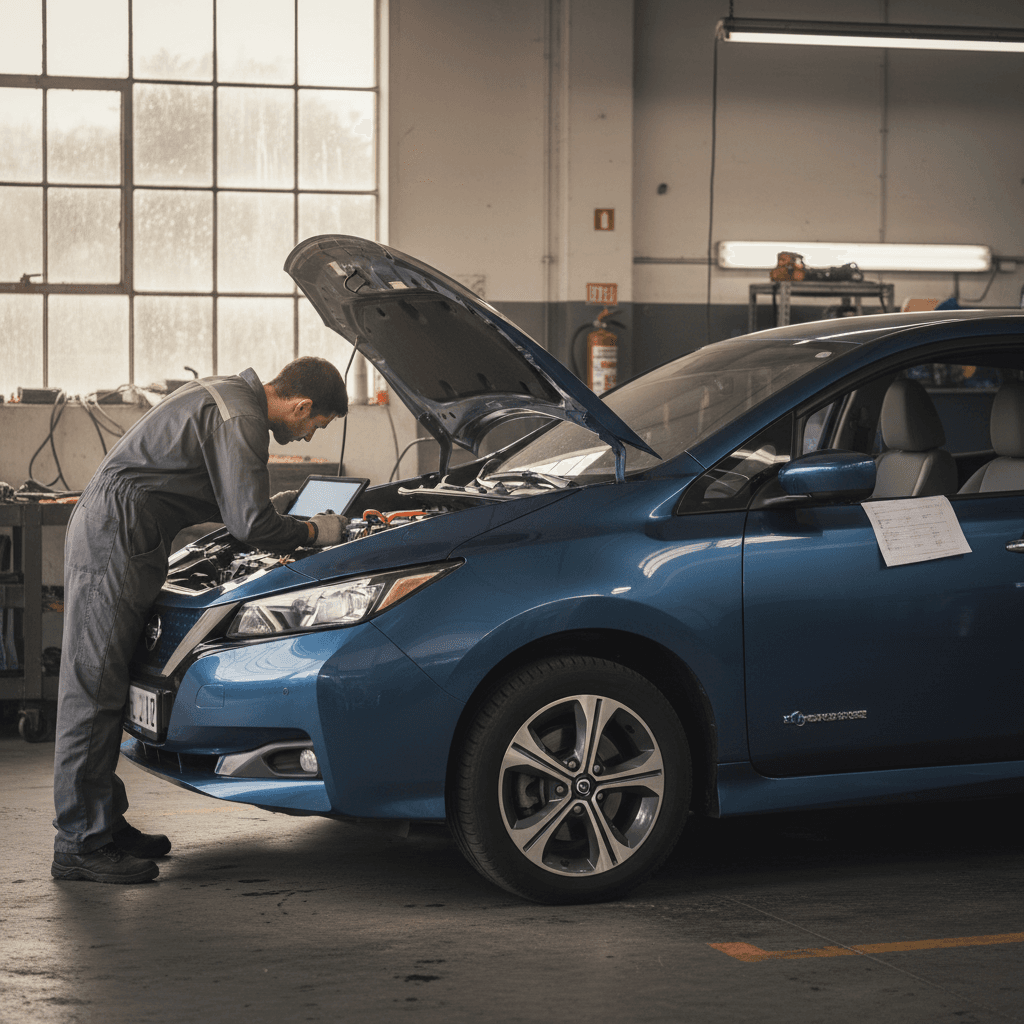
Separate from the battery issue, Nissan has recalled a wide spread of Leafs from the 2018–2022 model years for rearview camera problems. Depending on the exact campaign, the camera image may fail to appear or may show an incorrect or blank image on the center screen when you shift into reverse, which can reduce rear visibility and increase the risk of backing‑up crashes.
- Affects many 2021 Leafs regardless of trim.
- Issue is typically related to infotainment software and/or camera hardware.
- Fix is usually a software reflash; in some cases, the camera hardware may be replaced.
Good news for owners
How to spot camera issues before the repair
Even before you schedule recall work, you can look for warning signs every time you put the car into reverse:
- Intermittent or blank camera image on the screen.
- Lag before the image appears after shifting into R.
- Frozen image that doesn’t reflect your current surroundings.
- On‑screen error messages related to the camera system.
If you’re test‑driving a used 2021 Leaf and notice any of these symptoms, assume the camera recall or a software campaign may be outstanding and plan on having a Nissan dealer update the system.
Other software and electrical campaigns owners may see
Beyond the headline recalls, some 2021 Leaf owners have received notices for secondary software or electrical campaigns. These may be described as recalls, service campaigns, or technical service bulletins (TSBs), and they often address comfort, compliance, or reliability issues such as defroster logic, warning‑light behavior, or instrumentation quirks.
Safety recalls
Filed with NHTSA, tied directly to safety risks, and always free to repair at a dealer regardless of age or ownership. The battery overheating and rear camera issues fall into this bucket.
Service campaigns / TSBs
Technical fixes that improve reliability or comfort but may not be formally labeled as safety recalls. Coverage depends on warranty status and Nissan policy. Dealers often apply these during other service visits.
Why this matters for used shoppers
How to check if your 2021 Leaf has an open recall
Because eligibility can vary by build date, option content and prior repair history, the only reliable way to confirm open recalls is to run your exact vehicle identification number (VIN) through official tools. Here’s how to do it in a few minutes.
Three ways to see your 2021 Leaf recall status
Use more than one method if you’re about to buy or sell the car.
NHTSA online VIN lookup
Go to the official NHTSA recall lookup site and enter your 17‑digit VIN. The tool shows all open safety recalls that haven’t been completed on your Leaf.
Call a Nissan dealer
Give the service department your VIN and ask them to check for open recalls or campaigns. They’ll see both safety recalls and many internal Nissan campaigns in their system.
Nissan owner portal / app
If you’ve registered your Leaf with Nissan, sign into the online portal or mobile app. Many owners see recall alerts and campaign notices there before mailers arrive.
Where to find your 2021 Leaf’s VIN
1. Windshield base
Stand outside at the driver’s side and look at the bottom of the windshield near the dashboard. The VIN plate is usually visible from outside.
2. Driver’s door jamb
Open the driver’s door and look for a sticker on the door jamb or B‑pillar with the VIN, build date, and other information.
3. Registration and insurance
Your VIN appears on state registration, insurance cards, and most financing paperwork.
What 2021 Leaf owners should do, step by step
If you already own a 2021 Leaf, here’s a practical sequence to work through recalls without derailing your life, or your charging routine.
Action plan for current 2021 Leaf owners
1. Run a VIN recall check
Use the NHTSA tool and/or call a Nissan dealer to confirm which recalls or campaigns apply to your specific car. Make a quick list of campaign codes for your records.
2. Prioritize the battery / Level 3 recall
If the battery overheating recall is open, stop using DC fast charging immediately and book an appointment. Ask the dealer how long they expect your car to be in the shop and whether you’ll get a loaner.
3. Schedule camera and secondary fixes
Bundle the rear camera recall and any smaller software campaigns into the same visit when possible. That saves trips and helps the dealer keep your car’s software stack aligned.
4. Document everything
Keep copies of recall letters, repair orders and dealer invoices, even if the cost is $0. These documents help protect resale value and reassure the next owner.
5. Re‑check annually
New recalls do surface as vehicles age and real‑world data accumulates. Make it a habit to run a VIN check once a year or before selling/trading the car.
Thinking about trading out of your Leaf?
Buying a used 2021 Nissan Leaf? How to factor recalls in
On the used market, recalls can either be a red flag or a negotiating tool, depending on how they’ve been handled. A 2021 Leaf with open recalls isn’t automatically a bad car, but you do need a clear plan before you sign anything.
Potential upsides
- Free repairs: Completed recall work costs you nothing and can improve safety and reliability.
- Negotiating leverage: An open battery or camera recall may justify a discount if the seller hasn’t scheduled the fix.
- Proof of care: Documented recall completion from a Nissan dealer suggests the car has been on the radar and maintained.
Potential downsides
- Charging limitations: A battery recall that temporarily bans fast charging may be a deal‑breaker if you rely on road‑trip DC fast charging.
- Time without the car: If parts or software aren’t ready yet, you may face delays before the final fix.
- Resale questions: Buyers will ask about recall history; you’ll want documentation ready when it’s your turn to sell.
Don’t buy on promises alone
At Recharged, every used EV, including 2021 Leafs, comes with a Recharged Score Report that digs into battery health, fair market pricing and, crucially, open recalls and software campaigns. That way, you’re not guessing about whether you’ll be able to use Level 3 charging the day you bring the car home.
FAQ: 2021 Nissan Leaf recalls
Frequently asked questions about 2021 Nissan Leaf recalls
Bottom line: Is a recalled 2021 Leaf still a good bet?
A 2021 Nissan Leaf with open recalls shouldn’t automatically scare you off. The high‑profile Level 3 battery campaign is serious, but the fix is software‑driven and free, and many owners can live with slower Level 2 charging while they wait. The rearview camera recall is even simpler, one dealer visit and it’s usually behind you.
The real risk isn’t that your 2021 Leaf is recalled; it’s owning or buying one without understanding which recalls apply and whether they’ve been completed. If you follow the steps in this guide, run a VIN check, prioritize safety‑critical work, collect documentation, you can keep driving (or shopping) with confidence.
If you’d rather hand off the homework, Recharged backs every used EV with a Recharged Score Report that rolls battery health, pricing and recall status into one simple snapshot. Whether you’re buying, trading or selling a 2021 Leaf, that level of transparency turns a complicated recall landscape into a clear, manageable checklist.