You don’t buy a 2020 Porsche Taycan because it’s sensible. You buy it because it’s a 750-horsepower electric sledgehammer from Stuttgart that just happens to have four doors and a conscience. But when you’re looking at a used Taycan, the fun question quickly becomes a very practical one: **how reliable is the 2020 Porsche Taycan, really?**
Short answer
Overview: How Reliable Is the 2020 Porsche Taycan?
On paper, the **2020 Porsche Taycan reliability rating** is a study in contrasts. Porsche as a brand routinely ranks near the top for dependability among luxury marques, and owner reviews of the 2020 Taycan skew strongly positive on quality and reliability. At the same time, this first model year has been hit with a heavy wave of recalls and some well‑documented pain points around batteries, charging hardware, and software.
2020 Taycan Reliability at a Glance
The headline is this: **if you want bulletproof, Toyota‑Camry‑style anonymity, the 2020 Taycan is not your car**. If you’re willing to accept the higher maintenance and recall rhythm that comes with a cutting‑edge, first‑year performance EV, there’s a lot of upside, as long as you buy the right example and have its battery health verified.
Headline Ratings: Scores, Recalls, and Owner Satisfaction
Where the 2020 Taycan Stands
Balancing thrills against long-term peace of mind
Owner Ratings
Most owners love the car. On major review sites, the 2020 Taycan typically earns overall scores around 4.0–4.5 out of 5, with reliability often cited as a relative strong point versus other high-end EVs.
Formal Reliability Data
Traditional survey-based reliability data is thin for 2020 because of low production volume. Where it exists, the Taycan usually lands in the average-to-below‑average band among luxury EVs, dragged down by early software and electrical issues.
Recall Volume
The first-year Taycan has been subject to more than a dozen recalls, ranging from software updates to potential power loss, rearview camera issues, and high-voltage battery concerns. Most have dealer fixes, but they’re time‑consuming.
First model year reality check
Common 2020 Taycan Problems and Failure Patterns
Talk to independent EV shops, Taycan forums, and owners, and a pattern emerges. The 2020 Taycan isn’t generally falling apart, but when it misbehaves it tends to do so in **expensive, high‑tech ways**. Here are the issues that come up again and again.
Known 2020 Taycan Trouble Spots
Typical issues you’ll see mentioned by 2020 Taycan owners and technicians.
| Area | Typical Symptoms | Severity | Cost Risk |
|---|---|---|---|
| High‑voltage battery modules | Warning lights, reduced power, car won’t start or charge | High | Very high – module or pack replacement |
| 12‑volt battery | Low‑voltage warnings, random errors, car not waking up | Medium | Moderate – but far higher than a normal 12V swap |
| On‑board AC charger (esp. 19.2–22 kW units) | Won’t charge on AC, slow home charging, fault codes | Medium | High – charger replacement can be thousands |
| DC fast-charging / charge port | Charging session aborts, limited speeds, CCS niggles | Medium | Variable – could be software, could be hardware |
| HV coolant / heater issues | No cabin heat, reduced range in cold weather | Medium | Medium to high depending on parts access |
| Software glitches | Ghost warnings, frozen screens, incorrect range estimate | Low to Medium | Low – usually fixed by updates, but annoying |
| Suspension & tires | Wear from heavy curb weight and enthusiastic driving | Low | Medium – normal for performance sedans |
Not every 2020 Taycan will experience these failures, but they’re the themes you should screen for in a pre‑purchase inspection.
The 12-volt twist
Battery Health: High-Voltage Pack and Degradation
The Taycan’s 800‑volt battery is its beating heart, and its single most expensive component. The good news is that outright **high‑voltage pack failures are still rare relative to how many cars are on the road**. The bad news is that when they do happen, they’re headline‑makingly expensive and often involve long dealer stays while Porsche decides between module replacement or a full pack swap.
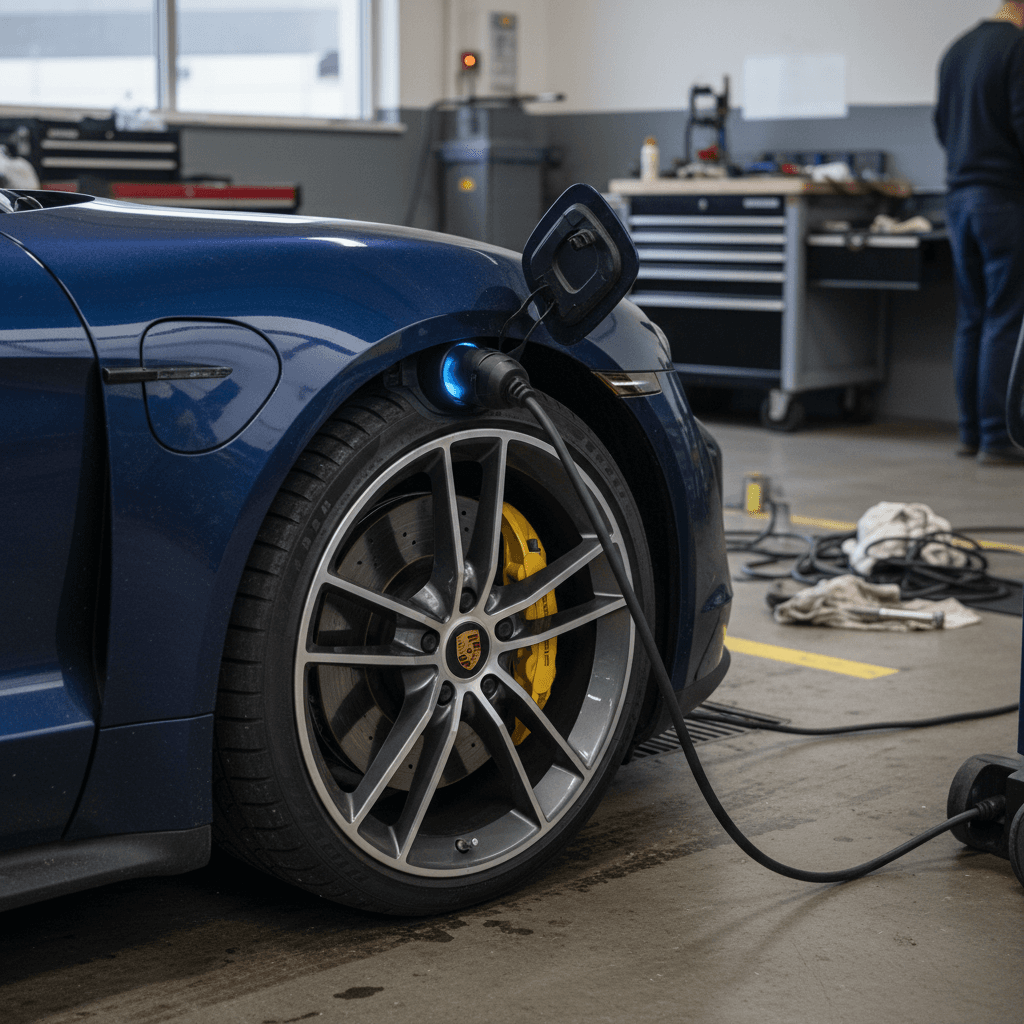
- Normal degradation on a cared‑for Taycan pack tends to be modest over the first 4–5 years, especially on cars that mostly AC charge and avoid constant 100% fast‑charges.
- Some early 2020 packs were affected by manufacturing flaws in individual modules. These show up as persistent warning lights, limp‑home modes, or the dreaded "electrical system error" followed by a flatbed ride.
- A handful of high‑profile cases involve near‑new Taycans needing full pack replacement. These are outliers, but they explain why a thorough history check is non‑negotiable.
Battery health > odometer
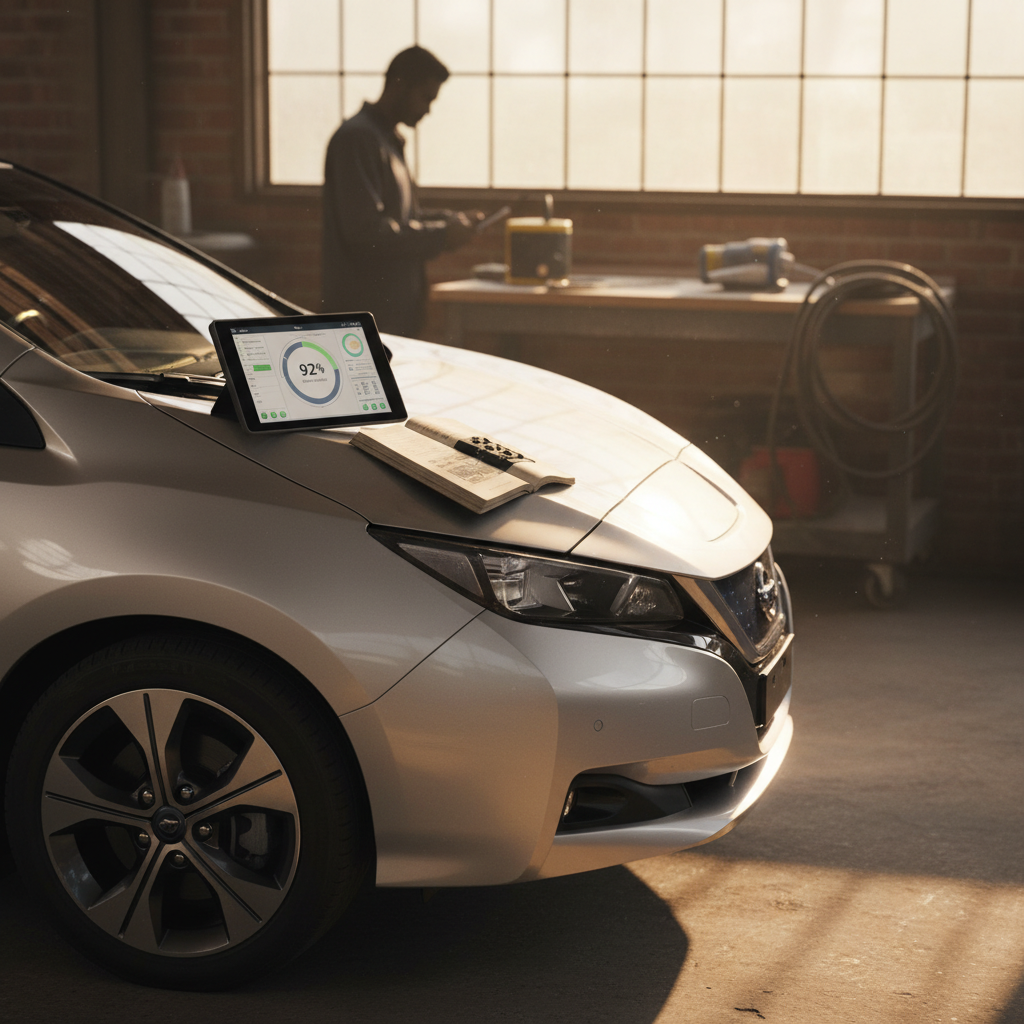
At Recharged, every Taycan we list goes through a **Recharged Score battery health diagnostic**, which measures real‑world pack capacity and flags any trouble codes in the high‑voltage system. On an independent purchase, you’ll want a Porsche dealer or EV specialist to pull the same kind of data before you sign anything.
12-Volt Battery and Charging Quirks
If the high‑voltage pack is the heart, the Taycan’s **12‑volt battery is its nervous system**. Porsche’s choice of a lithium 12V unit in early cars was forward‑thinking but has proved…let’s say temperamental. When the low‑voltage side of the car hiccups, everything from the charge port to the infotainment screen can start acting haunted.
Typical 12V issues on 2020 cars
- Low 12V warnings after DC fast charging or long parking spells
- Car refusing to start or wake up, despite a healthy main battery
- Random warning lights that disappear after a restart
- In some cases, failure of the 19.2–22 kW on‑board charger leading to AC charging faults
Why it matters for reliability
- A weak 12V can masquerade as dozens of unrelated faults.
- Replacement costs are far higher than a typical car battery swap.
- Misdiagnosed 12V issues can lead to unnecessary parts cannon repairs.
- Later software updates improved charging algorithms and 12V management.
Do NOT DIY-charge the Taycan 12V like a normal car
Software, Recalls, and OTA Fixes
Some of the 2020 Taycan’s bad reputation comes down not to hardware fragility but to **software that simply wasn’t finished when the car launched**. Over the last few years, Porsche has pushed out a steady stream of over‑the‑air and dealer-installed updates to address charging bugs, range display weirdness, safety‑system false alarms, and infotainment gremlins.
Key Recall Themes on the 2020 Taycan
Power loss / high-voltage faults
Early recalls addressed situations where the Taycan could experience a sudden loss of drive power due to control-unit logic errors. Updated software reduces this risk.
Rearview camera & visibility
Later recalls target rearview camera images that may not display correctly when reversing, an important safety and legal requirement in the U.S.
Battery and charging control
Multiple campaigns have refined how the car manages DC fast charging, AC charging, and the interface between the high‑voltage and 12V systems.
Airbag and restraint systems
Like many modern cars, the Taycan has seen occasional recalls for airbag control units or sensor calibration.
Chassis and suspension items
A smaller number of cars are covered by campaigns for suspension hardware or underbody components.
A recall isn’t automatically bad news
Repair Costs, Warranty, and What’s Still Covered
This is where the 2020 Taycan reminds you it’s a six‑figure German performance car at heart. When things go wrong, they tend to invoice like an entire used Nissan Leaf. That’s not a reason to avoid the car; it’s a reason to **understand what’s still under warranty and what you’re on the hook for.**
Typical Coverage on a 2020 Taycan (U.S.)
Always confirm exact terms for the car you’re considering
Original factory warranty
- 4 years / 50,000 miles new vehicle limited warranty from original in‑service date
- High‑voltage battery usually covered for around 8 years / 100,000+ miles for defects
- By 2026, most 2020s are out of basic warranty, but many still have battery coverage.
CPO and extended coverage
- Porsche CPO can add 1–2+ years of limited coverage beyond original warranty.
- Some cars may carry third‑party extended service contracts, terms vary widely.
- Read the fine print: many policies exclude high‑voltage batteries and charging equipment.
Ballpark Cost Bands for 2020 Taycan Repairs (Out of Warranty)
Not quotes, just a sense of scale so you’re not blindsided.
| Component | Typical Scenario | Likely Cost Band |
|---|---|---|
| 12‑volt battery replacement | Battery at end of life, no other damage | $1,500 – $3,500 |
| On‑board AC charger | 22 kW unit failure, replaced with updated part | $3,000 – $6,000 |
| High‑voltage module repair | Isolated bad module replaced under pack warranty | Often covered – otherwise five figures |
| Suspension wear items | Control arms, bushings, alignment at 40k+ miles | $1,000 – $2,500 |
| Infotainment / control unit | Frozen or failed head unit or minor ECU | $1,000 – $2,000 |
Actual repair bills vary hugely by dealer, region, and warranty status. These ranges are illustrative only.
Why a pre-purchase inspection isn’t optional
Should You Buy a Used 2020 Taycan?
The case for buying
- Phenomenal driving experience. Instant torque, authentic Porsche steering and braking, and an interior that still feels futuristic in 2026.
- Depreciation is your friend. The first owner absorbed the gut punch; you get a six‑figure EV for a fraction of MSRP.
- Many issues already surfaced. Early recalls and software updates have often been handled by now.
- Battery warranty may remain. Many 2020s still have years left on high‑voltage pack coverage.
The case for caution
- Complex, first-year platform. You’re buying the first draft of Porsche’s EV hardware and software.
- High repair costs. Even relatively minor electrical fixes can run into four figures.
- Patchy reliability story. Some owners enjoy trouble‑free cars; others seem to live at the service department.
- Later model years are calmer. 2022–2023 cars tend to show fewer charging and electrical complaints.
So should you buy one? If your priority list reads **“safety, comfort, and drama‑free commuting”**, a used Hyundai Ioniq 5 or Tesla Model 3 will give you fewer gray hairs. If, however, you’re after a genuinely special EV and you’re willing to do the homework, or let a company like Recharged do it for you, the 2020 Taycan can be a spectacular, if occasionally high‑maintenance, partner.
How to Shop a Used 2020 Taycan the Smart Way
Buying a 2020 Taycan isn’t like buying a used Camry. It’s closer to acquiring a retired racehorse: you want to know every limp, every medication, every trainer it’s ever had. Here’s how to stack the odds in your favor.
Pre-Purchase Checklist for a 2020 Taycan
1. Pull the full recall and service history
Ask for a complete printout from a Porsche dealer. Verify that all open recalls are either completed or scheduled, and look for repeat visits for the same complaint.
2. Get a battery health report
Have the high‑voltage pack scanned for usable capacity and error codes. On Recharged vehicles, this is summarized in the <strong>Recharged Score Report</strong> so you can compare cars side‑by‑side.
3. Stress-test AC and DC charging
Charge on a Level 2 AC station and, if possible, a DC fast charger before you buy. Watch for aborted sessions, unusual noises from the charge port, or warnings in the cluster.
4. Watch for 12V and electrical gremlins
On a long test drive, cycle the car on and off several times. Look for low 12V warnings, ghost error messages, or systems (like HVAC or audio) cutting out unexpectedly.
5. Inspect tires, brakes, and suspension
The Taycan is heavy and fast; consumables get eaten. Uneven tire wear, noisy suspension, or pulsation under braking are negotiation points, or reasons to walk.
6. Drive it like you’ll actually use it
Take the car on the highway, through stop‑and‑go traffic, and over rough pavement. Listen for rattles and feel for vibrations that might hint at underlying issues.
7. Run the numbers on warranty and coverage
Confirm exactly how much factory or CPO warranty time is left. Price out extended coverage if you’re risk‑averse, and understand what it does, and doesn’t, cover.
Make the marketplace work for you
FAQ: 2020 Porsche Taycan Reliability
Frequently Asked Questions about 2020 Taycan Reliability
If you think of reliability as the absence of drama, the 2020 Porsche Taycan is going to feel like a risky proposition. But if you think of reliability as the confidence that a machine will do what it’s built to do, and you’re willing to meet it halfway with careful shopping and proper care, the early Taycan can still be a compelling, big‑swing choice in the used‑EV world. Armed with a battery health report, a clean recall history, and a realistic budget, you’re not just buying a car; you’re buying one of the most interesting experiments in modern performance, and giving it a thoughtful second life.