If you’re eyeing a used 2020 Porsche Taycan, you’ve probably heard the horror stories right alongside the rave reviews. Early-build EVs always have some teething issues, and the first model year Taycan is no exception. The good news: most 2020 Porsche Taycan problems are well understood by now, and many have been addressed by recalls, software updates, or warranty repairs. The bad news: some cars have been almost flawless, while others have spent months in the shop, so you need to shop smart.
First model year reality
Overview: How Problematic Is the 2020 Porsche Taycan?
2020 Taycan Reliability at a Glance
Big picture, the 2020 Taycan’s core hardware, motors, performance, and braking, is generally solid. Where this car stumbles is in the complex stuff layered on top: battery management, charging behavior, over‑the‑air software, and the dense web of control modules that keep everything talking. That means you’re more likely to fight warning lights, charging errors, or an offline infotainment screen than a motor failure, but those problems can still be expensive and inconvenient if you’re out of warranty.
Early-build VINs can be spicier
Major 2020 Porsche Taycan Recalls You Should Know About
Before you worry about quirky screens or rattles, you should understand the big safety recalls that affect 2020 Taycans. The good news is that recalls are fixed for free; the catch is that not every used car on the market has actually been brought in yet, especially if it’s been lightly driven or has changed hands often.
Key Recalls Affecting 2020 Porsche Taycan
This is not a complete recall list, but it covers the big‑ticket items a used‑car shopper should ask about.
| Issue | Model years | Risk | Typical Fix |
|---|---|---|---|
| High-voltage battery short-circuit risk | 2020–2024 | Potential thermal event or fire, often without warning | Diagnostic software update; if anomalies are found, one or more battery modules may be replaced. |
| Backup camera image may fail to display | 2020–2025 | Rear visibility loss when reversing | Software update to the camera/control unit to prevent signal noise glitches. |
| Earlier battery and charging control updates | Primarily 2020–2021 | Charging faults, “red ring of death,” reduced range | Updated battery management software, replacement of faulty modules or control hardware as needed. |
Always run the VIN with a Porsche dealer to confirm all recalls are completed.
What to ask the seller
Battery & Charging Problems on the 2020 Taycan
Battery and charging behavior are the heart of most 2020 Porsche Taycan problems. Some owners report nothing more than normal EV degradation; others have seen repeated warning messages, failed DC fast‑charge sessions, or complete battery failures that left the car undriveable until major repairs were done.
- High-voltage battery module faults or failure, sometimes called the “red ring of death,” requiring one or more module replacements and weeks in the shop.
- Charging errors at DC fast chargers, sessions that stop after a brief “preparing to charge” phase, or cars that suddenly will only charge on lower‑power 50–60 kW stations.
- Battery degradation and range loss that feels faster than expected, particularly on early cars that lived on fast chargers or spent long periods at 100% state of charge.
- Software updates that change real‑world range or charging curves, sometimes for the better, sometimes not, depending on the update and how you use the car.
Battery short-circuit recall is serious
What’s “normal” battery behavior
- Some loss of range over 5–6 years is expected, especially if the car has been fast‑charged often.
- Occasional brief charging hiccups at older public DC stations are common across many EVs.
- Short‑term range swings with weather (winter vs. summer) are normal in any EV.
What’s a red flag on a 2020 Taycan
- Frequent "Electrical system error" or charging fault messages, especially if they strand the car.
- Car refuses most DC fast chargers but works at one specific station or only at low power.
- Range suddenly drops by tens of miles with no clear cause, or the car has already had multiple battery modules replaced.
How to protect a Taycan battery
Electronics, Infotainment & Camera Glitches
If the battery is the Taycan’s beating heart, the electronics are its nervous system, and on 2020 cars, they can have the jitters. Owner surveys and shop reports put infotainment and electrical gremlins near the top of the complaint list.
Common 2020 Taycan Electronics & Tech Issues
Most are fixable, but they’re annoying, and they cost time in the shop.
PCM infotainment glitches
The Porsche Communication Management system (PCM) can freeze, reboot randomly, lag when starting up, or drop Bluetooth and app connections.
Many bugs are cleaned up with over‑the‑air or dealer software updates, but some cars need hardware replaced.
Backup camera failures
On some Taycans, the rearview camera image may not appear or may cut out due to signal noise between the control unit and cameras.
This is covered by a large recall that uses a software update to stabilize the camera signal.
Random warning lights
Owners report intermittent "Electrical system error" or module‑specific faults that clear and reappear.
Sometimes these are false alarms; other times they point to deeper issues in control modules or the high‑voltage system.
Over-the-air updates are your friend
Build Quality, HVAC & Other Mechanical Issues
Beyond the battery and screens, 2020 Taycans can show some good old‑fashioned car problems, just with electric‑era price tags. These tend to be less common than software complaints, but they matter because they can be labor‑intensive to fix.
- Air conditioning and heat pump problems, ranging from weak cabin cooling to compressor or heater failures that trigger fault codes, sometimes tied into high‑voltage system errors.
- Window regulator failures, where one or more windows stop working properly and need new regulators or switches.
- Interior rattles, especially behind the lower touch panel or in the dashboard, typically fixed under warranty but frustrating on a premium car.
- Seat‑related issues on some Taycans in later recalls (seat heating mat faults that impact airbag logic on certain years), worth checking for completed campaigns even if your focus is a 2020.
Why shop history matters more than mileage
What Real 2020 Taycan Owners Are Experiencing
Owner stories on Taycan forums and social media run the full spectrum, from “flawless for 20,000 miles” to “in the shop for 4–5 months.” That mismatch is exactly why doing your homework on an individual 2020 Taycan is so important.
When it goes right
- Some 2020 owners report tens of thousands of miles with only minor fixes like plastic trim or a window regulator under warranty.
- Plenty of drivers say it’s the most enjoyable car they’ve ever owned, with brutal acceleration and everyday usability.
- Cars that live mostly on home charging and stay current on recalls tend to have fewer high‑voltage headaches.
When it goes wrong
- Others describe multiple high‑voltage battery module replacements, repeated "Electrical system error" messages, and long waits for parts.
- Some early 2020s have been back to the dealer 8–9 times in a year, racking up months out of service.
- Charging issues after dealer visits, where the car suddenly refuses most DC fast chargers, are not unheard of and can take persistence to resolve.
The pattern with early Taycans isn’t catastrophic failure across the board, it’s inconsistency. One 2020 will be rock‑solid; the next VIN off the line will be a problem child. That’s why individual vehicle history matters more than model‑wide reputation.
Buying a Used 2020 Taycan: Problem Checklist
If you still want what the Taycan does better than almost any other EV, Porsche steering feel, a low driving position, and that quiet, instant shove, you’re not wrong. You just need a disciplined buying process. Here’s how to separate the heroes from the headaches.
Pre-purchase Checklist for a 2020 Porsche Taycan
1. Pull a full recall & service history
Ask a Porsche dealer to run the VIN and print the recall and campaign history. Confirm that the major battery and camera recalls have been completed, and note any repeated high‑voltage or AC‑system repairs.
2. Get a battery health report
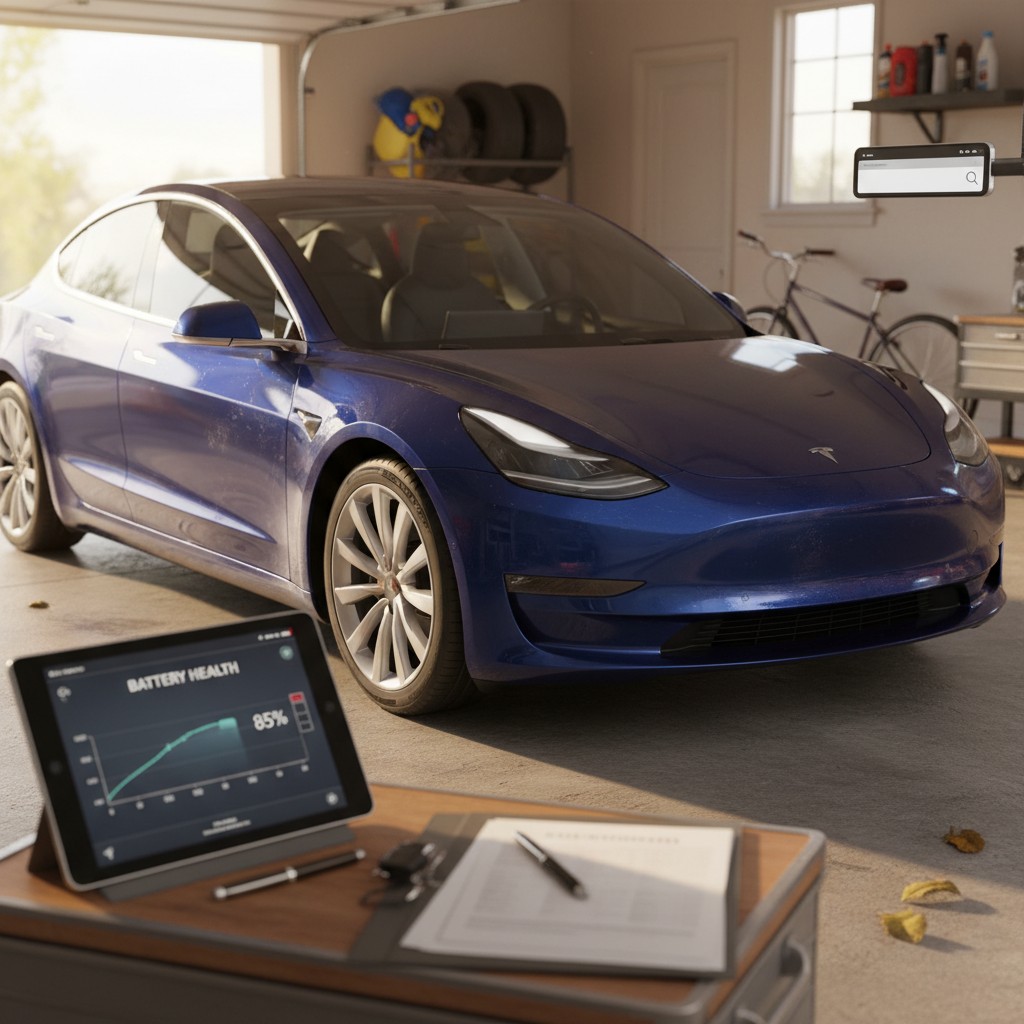
Don’t settle for a generic “battery OK” on a scan tool. You want a quantified state of health (SOH), module‑level data where possible, and a clear picture of how much usable capacity remains compared to new.
3. Test multiple DC fast chargers
If you can, fast‑charge the car at more than one network. Watch for charging sessions that fail to start, stop abruptly, or limit power well below what the charger and Taycan should support.
4. Cycle all the tech and screens
Spend time with the PCM: pair your phone, run navigation, switch drive modes, adjust settings. Look for freezes, reboots, lag, or error messages. Check the backup camera every time you shift into reverse.
5. Check HVAC performance carefully
Turn the climate control up and down, test heated and cooled seats, and listen for unusual compressor noises. Weak heat or AC on a Taycan can hint at bigger high‑voltage component issues.
6. Inspect for water, rattles, and trim issues
Look for moisture in light housings, stains in the cargo area, or trunk seals that look disturbed. On the test drive, listen for rattles behind the screens or from the rear suspension over rough pavement.
7. Confirm warranty coverage (and who will honor it)
Many 2020 Taycans are now covered by CPO or extended warranties rather than the original bumper‑to‑bumper. Get the terms in writing and verify which dealer or shop will perform covered repairs.
How Recharged approaches used Taycans
Ready to find your next EV?
Browse VehiclesWhy Battery Health Matters Most, and How Recharged Checks It
On a 2020 Taycan, cosmetic flaws or a rattly trim piece are just noise. The real money is in the battery pack and the high‑voltage hardware wrapped around it. Those components define not just how far you can drive, but what it will cost you to keep the car on the road over the next five years.
What a Serious Battery Check Should Cover
A quick test drive isn’t enough for a first‑gen performance EV.
Capacity & SOH
Measure remaining usable capacity versus the factory spec. A few percent of loss is normal; double‑digit losses on a relatively low‑miles 2020 deserve a closer look.
Module-level anomalies
Scan for individual modules that are consistently out of line on voltage, temperature, or internal resistance, exactly the sort of issues that show up in the big Taycan battery recalls.
History & usage pattern
Combine data with what you can learn about the car’s life: lots of DC fast charging, long storage at high state of charge, or repeated battery repairs under warranty.
Recharged’s diagnostic process is built for this job. Our Recharged Score doesn’t just give you a letter grade; it pulls together battery health data, fair‑market pricing, and expert EV inspection so you’re not guessing whether the 2020 Taycan you love today will still love you back in three years.
Use the inspection to negotiate
2020 Taycan: Pros, Cons & Who It Still Suits
Why a 2020 Taycan is still tempting
- It drives like a Porsche should: precise steering, big brakes, and composure that many newer EVs still don’t match.
- Depreciation has done some heavy lifting. Compared with a new Taycan, an early car can look like a bargain on paper.
- Most big recalls are now well documented, and many cars have already had major components replaced under warranty.
Where you need to be realistic
- Expect more software updates, service visits, and odd faults than you’d see on a simple gas car.
- Out‑of‑warranty high‑voltage repairs can be extremely expensive if you don’t have coverage.
- If you rely heavily on public DC fast charging, you must verify that this specific car charges reliably across multiple networks.
Who a 2020 Taycan suits best
FAQ: 2020 Porsche Taycan Problems Answered
Frequently Asked Questions About 2020 Taycan Problems
A 2020 Porsche Taycan isn’t a set‑and‑forget appliance. It’s an early, high‑performance EV from a brand that pushed hard to make a statement, and sometimes pushed its software and high‑voltage hardware right to the edge. If you respect that, do your homework on battery health, recall history, and real‑world charging behavior, a good 2020 Taycan can still be one of the most rewarding electric cars you can drive. If you’d rather not gamble, leaning on a partner like Recharged, where every car gets a Recharged Score and EV‑specialist inspection, can tilt the odds dramatically in your favor.