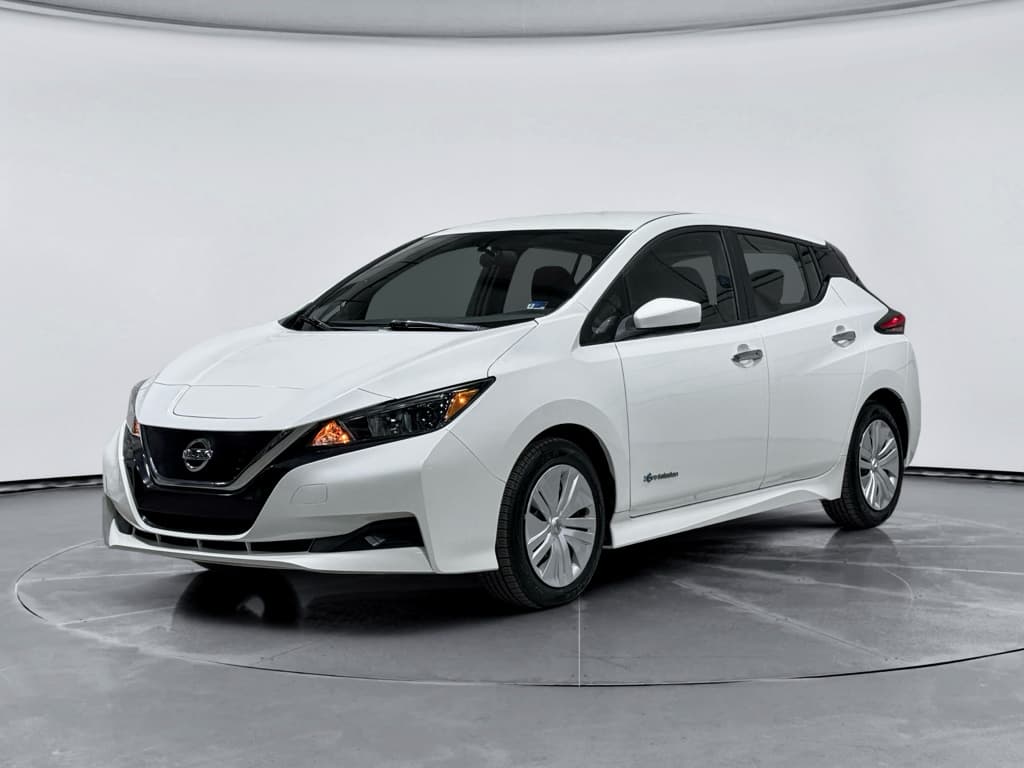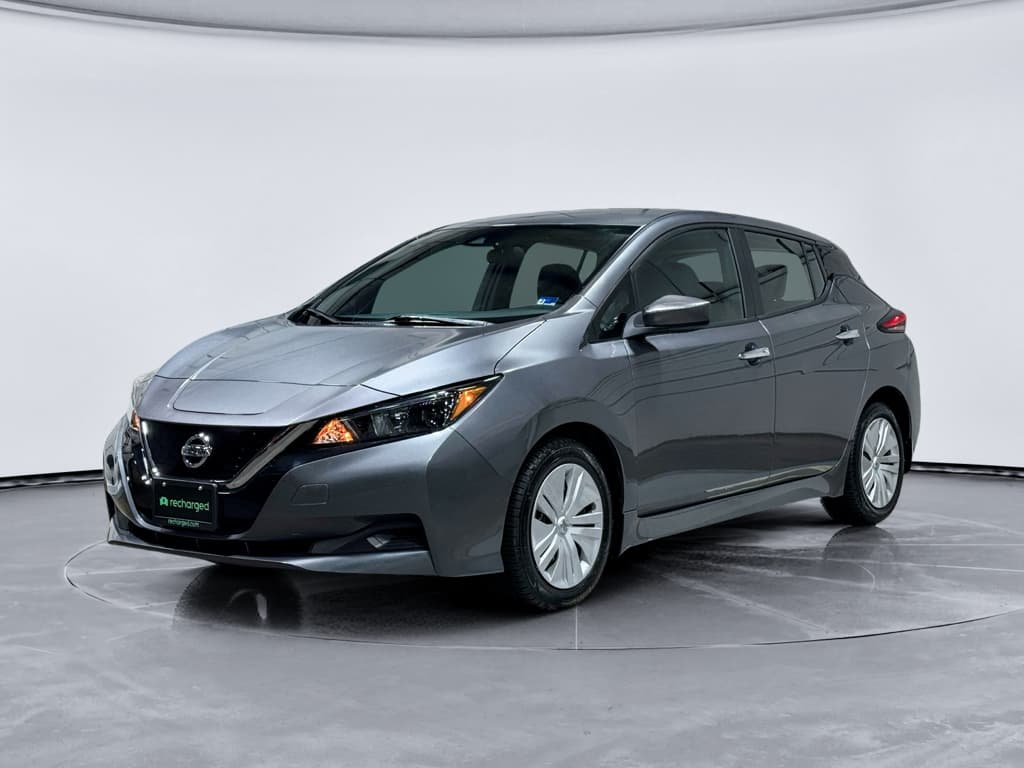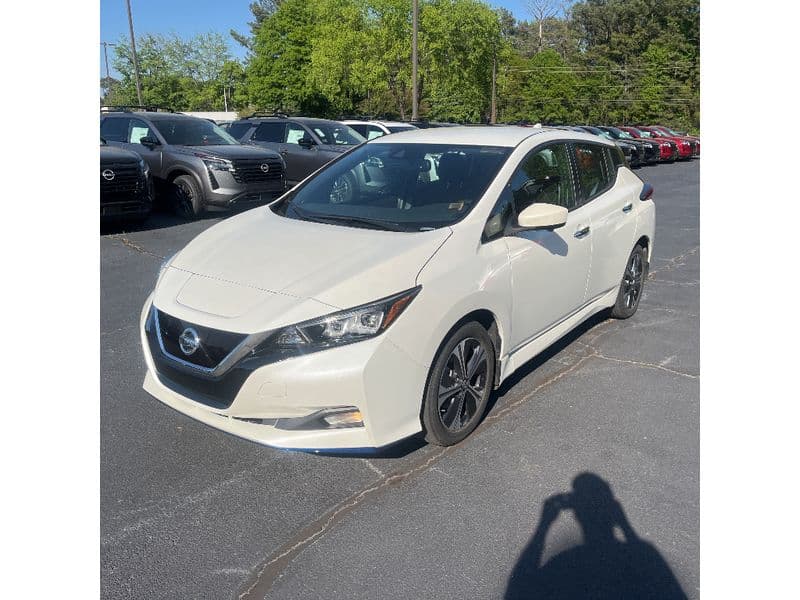
If you’re shopping used EVs, the 2019 Nissan Leaf is the affordable gateway drug. It’s also a car with a very particular set of strengths and one big question mark: battery reliability. Range, degradation, recalls, this is where the story lives. Let’s unpack how reliable the 2019 Leaf really is, and whether you should park one in your driveway.
Quick take
2019 Nissan Leaf reliability at a glance
2019 Nissan Leaf reliability snapshot
On paper, the 2019 Leaf scores well with owners. Consumer reviews often give it high marks for day‑to‑day reliability, comfort, and low running costs. Where opinions diverge is range: drivers in mild climates who charge gently tend to be delighted; drivers who fast‑charge often, run the battery hard, or live in hot or very cold regions complain loudly about rapid capacity loss and quirky state‑of‑charge behavior.
The real reliability story
Battery health and degradation on the 2019 Leaf
The 2019 Leaf came with either a 40 kWh pack (Leaf S/SV/SL) or a 62 kWh pack in the Leaf Plus models. Both are air‑cooled lithium‑ion batteries without liquid thermal management. That design keeps cost and complexity down, but it’s the root of the Leaf’s reputation for faster degradation than many rivals.
- In mild climates with mostly Level 2 home charging, many 2019 Leafs still show strong health and only modest range loss.
- In hot climates or with heavy DC fast‑charging, some owners report losing several capacity bars in just a few years.
- Cold‑weather owners report dramatic temporary range loss and weird state‑of‑charge swings at low battery levels, especially on highway climbs or hard acceleration.
How to read the capacity bars
Main things that accelerate degradation
- Heat: Long summers, parking in direct sun, and hot garages.
- Frequent DC fast‑charging: Living at CHAdeMO stations instead of Level 2 at home.
- High average state of charge: Keeping the pack near 100% for days at a time.
- Deep discharges: Regularly running down into single‑digit percent or “---” range.
Habits that help the battery age gracefully
- Home Level 2 charging, finishing close to your departure time.
- Daily charging between roughly 30–80% instead of 0–100%.
- Using DC fast charging only on road trips or emergencies.
- Parking in the shade or a garage when possible.
Watch for “yo‑yo” state of charge
Battery warranty, recalls, and what they actually cover
From the factory, the 2019 Leaf battery is covered by an 8‑year/100,000‑mile lithium‑ion battery warranty from the original in‑service date. Separate EV‑system coverage protects key components like the motor, inverter, and onboard charger for 5 years/60,000 miles.
2019 Nissan Leaf warranty highlights
Key warranty coverage that still matters on used 2019 Leafs.
| Component | Coverage | What it means for used buyers |
|---|---|---|
| Basic bumper‑to‑bumper | 3 years / 36,000 miles | Expired on all 2019 cars by now. |
| Powertrain & EV system | 5 years / 60,000 miles | Likely expired unless the car was first sold very late; still relevant for low‑mileage cars with late in‑service dates. |
| Lithium‑ion battery (defects & capacity | 8 years / 100,000 miles | Many 2019 Leafs are still within this window, capacity loss down to 8 bars or fewer may qualify for replacement. |
| Corrosion | 5 years / unlimited miles | Mostly expired; still nice to have documented if major rust appears. |
Coverage is measured from original in‑service date, not model year.
Recent Leaf battery recalls
When a 2019 Leaf does qualify for a warranty battery replacement, usually due to capacity dropping below 9 bars or confirmed cell defects, owners report that Nissan installs a fresh pack and often provides a loaner car during the repair. That can turn a tired Leaf into a near‑new EV overnight. On the flip side, some owners say getting a claim approved can be hit‑or‑miss and dealer‑dependent, especially when symptoms are intermittent.
Common 2019 Nissan Leaf problems beyond the battery
Strip away the battery drama and the 2019 Leaf is an econobox with a motor and a big orange extension cord. That mechanical simplicity is good news: there’s no timing belt, no spark plugs, no oil, and no multi‑speed automatic to implode at 95,000 miles. Most issues you’ll see are nuisances, not wallet‑killers.
Common non‑battery issues owners report
Mostly small annoyances, still worth checking on a test drive.
HVAC & heat pump quirks
Driver‑assist calibration
Infotainment glitches
Where the Leaf is rock‑solid
40 kWh vs. 62 kWh (Leaf Plus): Which is more reliable?
The 2019 lineup splits into two tribes: the standard Leaf with a 40 kWh pack and the Leaf Plus with a 62 kWh pack and more power. Both share the same basic architecture and lack of liquid cooling, but they don’t age quite the same way.
2019 Leaf 40 kWh vs. Leaf Plus 62 kWh
How the two battery options compare from a reliability and ownership standpoint.
| Aspect | 40 kWh Leaf | 62 kWh Leaf Plus |
|---|---|---|
| EPA range when new | ~150 miles | ~226–239 miles (trim‑dependent) |
| Real‑world range today | Often 90–130 miles depending on climate & care | Often 150–200 miles for healthy packs, but degraded examples exist |
| Degradation reputation | Well‑documented loss in hot climates and with heavy fast‑charge use | Larger buffer hides some loss; similar underlying vulnerabilities |
| Best use case | Short‑range commuting, second car, urban duty | Longer commutes, light road trips within CHAdeMO network |
| Resale sensitivity to degradation | Very high, losing a bar or two turns it into a city car | High, but extra capacity gives more headroom as it ages |
Both versions can be reliable if the pack has been treated well; usage patterns matter more than chemistry on paper.
Which should you choose?
How long will a 2019 Leaf battery really last?
We’re now far enough out from 2019 that these cars are a living case study. In the wild, you’ll see everything from Leafs that still feel close to new to cars that have shed several bars and a big chunk of range.
- A gently‑used 2019 Leaf in a mild climate, mostly Level 2 charged, can plausibly deliver 10+ years of useful commuter duty before range becomes inconvenient.
- A hard‑used ex‑fleet car from a hot region that lived on DC fast chargers may be range‑compromised in five to seven years.
- Battery replacements under warranty reset the clock, but you should confirm the installation date of the new pack, not just the car’s model year.
Climate matters more than odometer
What to check before buying a used 2019 Leaf
If you’re evaluating a 2019 Leaf, you’re not really buying a used car, you’re buying a used battery with seats attached. Here’s how to separate the keepers from the Craigslist horror stories.
Pre‑purchase checklist for a 2019 Leaf
1. Read the capacity bars
Turn the car on and look at the 12 small capacity bars on the right side of the cluster. <strong>11–12 bars</strong> is ideal, 9–10 can be workable at the right price, and 8 or fewer should trigger deeper questions about warranty and price.
2. Scan the battery if possible
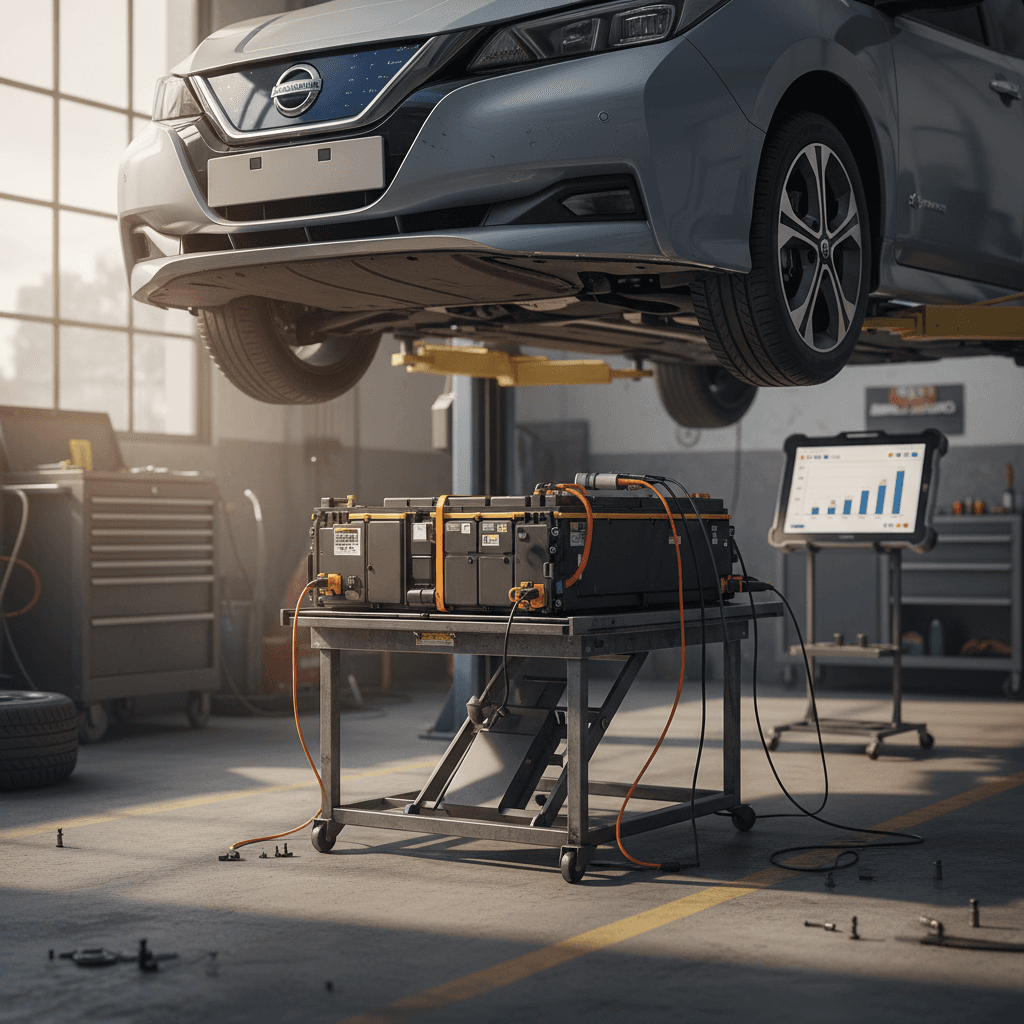
If you can, have the pack scanned with a professional tool or an app like LeafSpy. You’re looking for consistent cell voltages and a reasonable state‑of‑health number. This is exactly what Recharged’s <strong>Recharged Score</strong> does for you, our battery diagnostics quantify real health before you sign anything.
3. Check for recall and warranty status
Run the VIN for open recalls and confirm whether the battery warranty is still active based on the original in‑service date. Ask for documentation if the pack has already been replaced, this can be a big plus.
4. Test drive in real conditions
Do a mixed drive with highway speeds and a modest hill if possible. Watch for big, sudden drops in state of charge, power‑limiting warnings, or the car refusing to fast‑charge after a brief drive.
5. Inspect charging hardware
Make sure the CHAdeMO fast‑charge port door opens and closes cleanly, no bent pins, and the onboard charger works on Level 2. A short plug‑in at a public charger or home Level 2 can tell you a lot.
6. Look past the battery, too
Check tires, brakes, suspension clunks, and windshield chips just like any used car. Cabin wear on seats and steering wheel can hint at hard use even if mileage looks low.
How Recharged de‑risks used Leafs

Real-world ownership costs and maintenance
Once you’re in a good 2019 Leaf, day‑to‑day reliability is pleasantly boring. Electricity is cheap compared with gas, and there are fewer wear items to service.
Where the 2019 Leaf saves you money
Most owners spend far less on upkeep than with a gas compact.
No oil, no tune‑ups
Gentle on brakes
Predictable energy costs
The big what‑if: out‑of‑warranty battery
Who the 2019 Leaf is (and isn’t) a good buy for
Great fit if…
- You have reliable home Level 2 charging.
- Your typical daily driving is under 60–80 miles, even after accounting for some degradation.
- You live in a mild or cool climate.
- You value low running costs more than long‑haul road‑trip capability.
- You’re buying from a source that can show objective battery health data, like a Recharged Score Report.
Probably not the right choice if…
- You routinely need 150+ miles of highway range in all weather.
- You live in a very hot region and park outside all day.
- Your only realistic charging option is frequent DC fast‑charging.
- You want a future‑proof fast‑charge standard, CHAdeMO is being phased out in North America.
- You’re uncomfortable with the idea that long‑term value depends heavily on one big component: the battery.
FAQ: 2019 Nissan Leaf reliability
Frequently asked questions about 2019 Leaf reliability
Bottom line: Is a 2019 Nissan Leaf a good used bet?
Viewed purely as transportation, the 2019 Nissan Leaf is a triumph of low‑drama engineering: no oil changes, no shifting, no drama in traffic, and a cabin that wears mileage reasonably well. Viewed as a battery pack on wheels, it’s a little more complicated. The absence of liquid cooling means some packs age beautifully while others age badly, and there’s no way to tell which camp a car falls into without looking closely.
If you buy the right 2019 Leaf, a car with good capacity bars, clean history, appropriate pricing, and preferably remaining battery warranty, you get a quiet, efficient commuter that costs pennies per mile to run. Buy the wrong one, and you inherit someone else’s range anxiety. That’s exactly why Recharged exists: to surface the real story on battery health with our Recharged Score Report, offer expert EV guidance, and back it with flexible financing, trade‑in options, and nationwide delivery.
So is 2019 Nissan Leaf reliability good? In the right use case, with a vetted battery, it’s more than good enough. Just don’t buy blind. Make the pack prove itself on paper, and on the road, before you fall for the price tag.