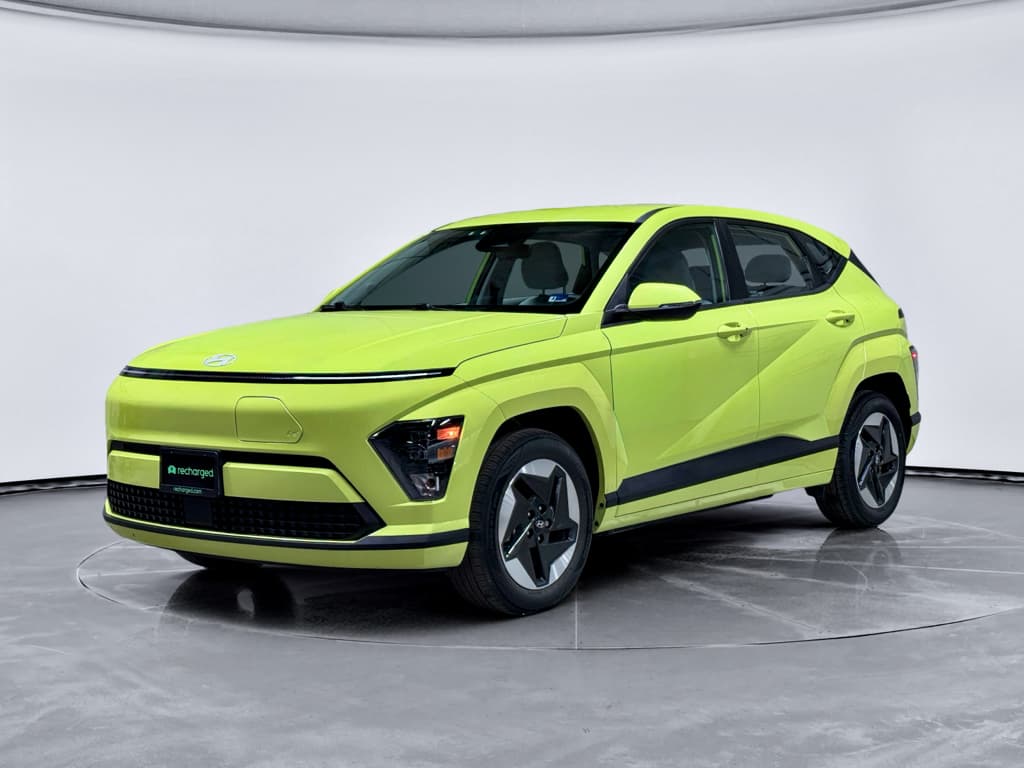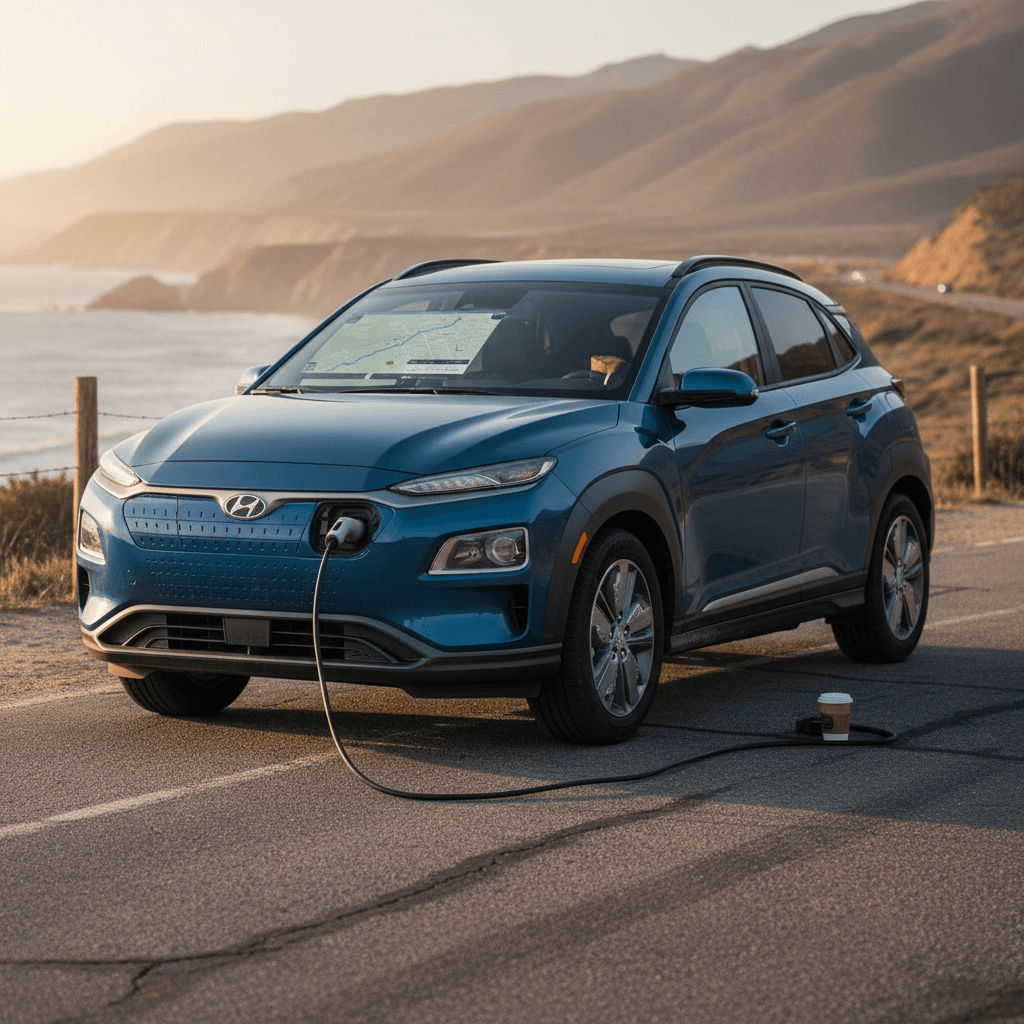
If you’re looking at a 2023 Hyundai Kona Electric, you’ve probably seen the official EPA range number, around 258 miles on a full charge. But your real question is simpler: in everyday driving, especially at highway speeds or in winter, how far will a 2023 Kona Electric actually go on a charge? This guide breaks down real‑world 2023 Hyundai Kona Electric range test results, explains what affects them, and shows what to expect if you’re buying one new or used.
Why real‑world range matters
2023 Hyundai Kona Electric range basics
The 2023 Hyundai Kona Electric uses a 64 kWh (usable) battery pack and a front‑mounted electric motor. On paper, that delivers an EPA‑rated range of about 258 miles on a mixed cycle and a combined efficiency around 120 MPGe. In practical terms, that means roughly 3.7–4.1 miles per kWh when conditions are mild and speeds are reasonable.
Key 2023 Kona Electric range specs
Those specs put the 2023 Kona Electric in the sweet spot for compact EVs: enough range for most daily commutes plus regional trips, but still efficient and relatively light. Where things get interesting is how that 258‑mile figure holds up when you run a true range test at highway speeds, in city traffic, or in winter.
EPA range vs real‑world tests
EPA numbers assume a blend of city and highway driving with controlled temperatures. Real‑world tests tend to reveal two big truths about the 2023 Kona Electric: 1) It’s extremely efficient in urban and suburban use. 2) Like most EVs, its highway range at 70–75 mph is noticeably lower than the sticker suggests.
What lab tests assume
- Moderate temperatures (around 70°F).
- Gentle acceleration and braking.
- Mix of urban and highway speeds.
- No rooftop boxes, bike racks, or heavy cargo.
What your driving looks like
- 75–80 mph highway cruising to keep up with traffic.
- Climate control always on, heat in winter, A/C in summer.
- Short hops, cold starts, and stop‑and‑go congestion.
- Real cargo: kids, pets, luggage, sports gear.
Expect a range band, not a single number
City vs highway range: what our blended tests show
Run a 2023 Kona Electric through structured tests and you see a clear pattern: city and suburban routes beat the EPA number easily, while sustained highway speeds trim it. Below is a simplified view of what many owners and independent testers report under typical U.S. conditions.
Real‑world 2023 Kona Electric range scenarios
Approximate observed range bands for a healthy 2023 Kona Electric starting near 100% charge.
| Scenario | Average Speed | Conditions | Approx. Efficiency | Approx. Range |
|---|---|---|---|---|
| Urban / suburban loop | 25–35 mph | Light traffic, frequent stops, ECO mode | 4.1–4.5 mi/kWh | 260–285 miles |
| Mixed commuting | 40–60 mph | Suburban arterials plus short freeway stints | 3.7–4.1 mi/kWh | 235–260 miles |
| Highway, moderate | 65 mph | Flat terrain, light wind | 3.2–3.6 mi/kWh | 205–230 miles |
| Highway, fast | 75–78 mph | Typical U.S. interstate speeds | 2.8–3.2 mi/kWh | 180–205 miles |
Figures assume a healthy battery and mild temperatures around 65–75°F; your results may vary.
Use mph, not just miles
Winter range test: how cold weather hits the Kona
Cold weather is the enemy of every EV’s range, and the 2023 Kona Electric is no exception. Below freezing, you’re fighting two battles: a colder battery that can’t accept or release energy as efficiently, and a cabin that needs electric heat instead of waste heat from a gasoline engine.
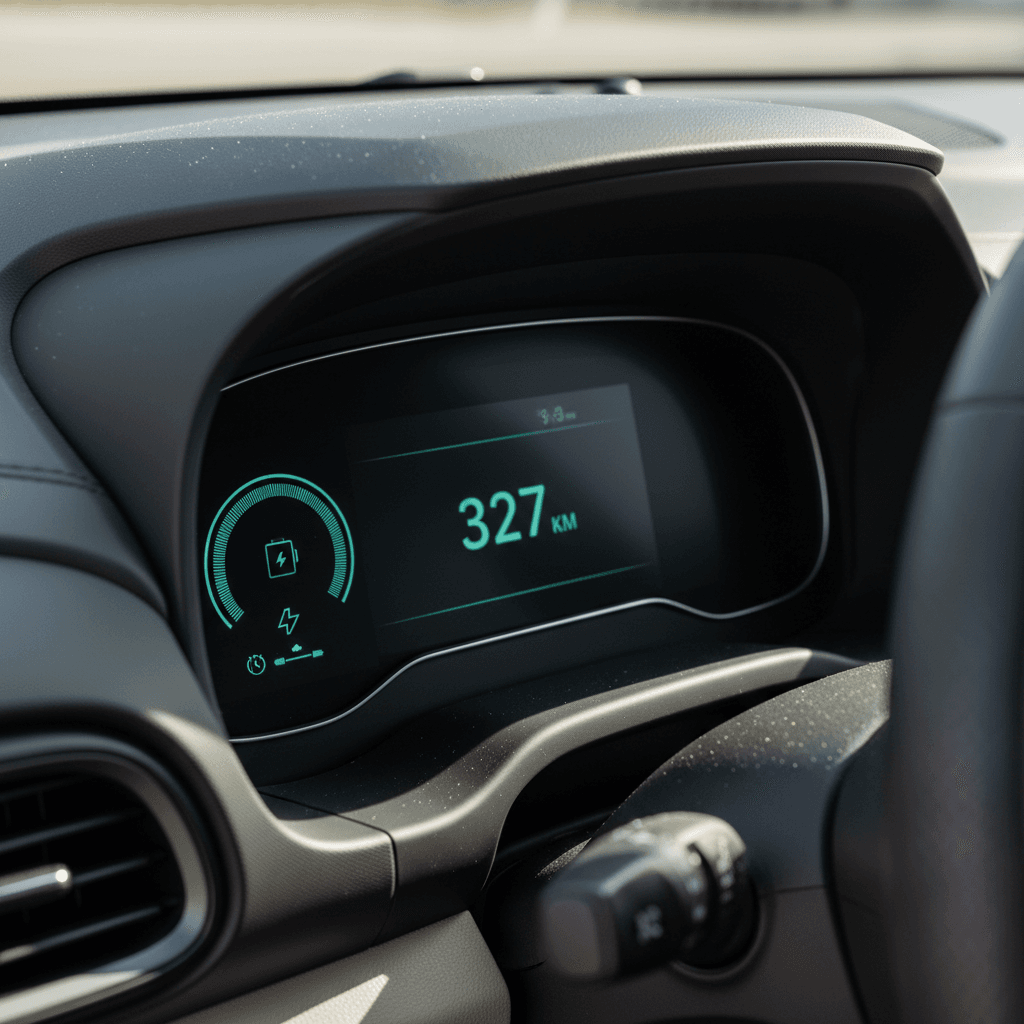
Across multiple winter 2023 Hyundai Kona Electric range tests in the northern U.S. and Canada, owners and reviewers commonly see a 25–35% range reduction when temperatures sit around 14–32°F, with bigger hits on short trips where the car keeps reheating a cold cabin.
Typical winter range scenarios for the 2023 Kona Electric
Assuming a healthy battery starting near 100% state of charge
Cold city driving (~25°F)
Driving: 25–35 mph city speeds, pre‑heated while plugged in.
Range band: roughly 185–220 miles.
Short trips hurt efficiency most, group errands into one outing when you can.
Cold highway (~25°F)
Driving: 65–70 mph, steady interstate cruising, heat set to comfort level.
Range band: roughly 150–185 miles.
Expect more charging stops on winter road trips and plan DC fast‑charge breaks accordingly.
Cold + wet + wind
Driving: 70+ mph, headwinds or heavy rain/snow.
Range band: sometimes as low as 135–160 miles.
This is the worst‑case recipe: high drag, rolling resistance, and aggressive heating.
Don’t ignore the bottom 10% in winter
How speed, driving style, and cargo change your range
After temperature, the biggest factor in any 2023 Hyundai Kona Electric range test is how you drive. Because aerodynamic drag rises with the square of speed, pushing from 65 to 80 mph can eat up far more range than you expect. Add in hard acceleration, heavy cargo, or roof racks and the gap between EPA numbers and your dash display widens quickly.
Major real‑world range killers in the Kona Electric
1. Sustained high speeds
Above about 70 mph, the Kona Electric’s efficiency drops quickly. Cruising at 75–80 mph can cost you 10–20% of your potential range compared with holding 60–65 mph.
2. Aggressive acceleration
Punching the throttle from every stop not only burns energy but also wastes the Kona’s excellent regenerative braking potential. Smooth inputs let you recapture more energy and extend range.
3. Under‑inflated tires
Low tire pressures increase rolling resistance and sap range. Check pressures regularly, especially heading into temperature swings, and keep them at or near the door‑jamb placard value.
4. Roof boxes and racks
Any cargo on the roof increases aerodynamic drag. With a box or bikes up top, you can easily lose another 5–10% of highway range, especially in crosswinds.
5. Heavy loads
Extra passengers, tools, or luggage add weight. It’s not as dramatic as speed or temperature, but expect a modest bite out of efficiency on fully loaded trips.
6. Constant HVAC changes
Cranking heat or A/C up and down forces the system to work harder. Set a comfortable temperature and leave it; use seat and steering‑wheel heaters in cold weather for better efficiency.
Why the Kona still shines on efficiency
Battery health, degradation, and buying a used 2023 Kona Electric
If you’re shopping the used market, range isn’t just about how you drive, it’s about how the previous owner treated the battery. The 2023 Kona Electric has an 8‑year/100,000‑mile high‑voltage battery warranty, and real‑world data so far suggests modest degradation when the pack is charged and stored responsibly.
What affects long‑term Kona Electric range
Key battery health factors to consider on a used 2023 model
Charging habits
Frequent DC fast charging at high states of charge and regularly sitting at 100% can accelerate degradation.
Look for cars whose owners primarily AC‑charged at home and only fast‑charged on trips.
Climate and storage
High heat is tough on lithium‑ion batteries. Cars parked outside in hot climates at full charge can show more loss.
Garage storage and moderate climates generally mean better long‑term health.
Mileage and usage
Higher‑mileage cars naturally show more degradation, but a well‑maintained 60,000‑mile Kona Electric can still deliver solid range.
Pay attention to how quickly the state of charge drops on a long test drive.
Software & maintenance
Hyundai has issued software updates aimed at optimizing charging and battery management.
Confirm that recommended updates and services have been performed; a well‑maintained EV typically ages better.
How Recharged helps you see real battery health
Planning trips and charging with realistic Kona range
Once you know the realistic range bands for your Kona Electric, trip planning gets easier. Instead of wondering whether you’ll make it, you can design routes around comfortable buffers and convenient charging stops, especially crucial if you’re using the car for longer weekly drives or regional travel.
- For daily commuting under 60 miles round‑trip, a 2023 Kona Electric with healthy range can easily go multiple days between charges.
- For 150–200‑mile weekend trips, plan a single DC fast‑charge stop each way and arrive with 15–25% remaining.
- On 300+‑mile days, expect to fast charge at least twice in good weather, more in winter or at higher speeds.
- Use major charging networks’ apps, alongside tools built into your Kona’s navigation, to check station status and charging speeds before you arrive.
Build charging into your breaks
Practical tips to maximize your 2023 Kona Electric range
Whether you’re running your own 2023 Hyundai Kona Electric range test or just want to cut down on charging stops, a few small adjustments can pay big dividends. You don’t need to drive like a hypermiler; focus on a handful of habits you can stick with every day.
Everyday range‑boosting habits for Kona Electric owners
Use ECO or ECO+ on longer drives
Hyundai’s ECO modes soften throttle response and optimize climate control. For most drivers, they offer a painless way to squeeze out extra miles without dramatically changing driving style.
Pre‑condition while plugged in
On cold or hot days, warm or cool the cabin while the Kona is still on the charger. That way, the battery’s energy goes toward motion instead of initial climate control spikes.
Leverage regenerative braking paddles
The Kona Electric’s steering‑wheel paddles let you adjust regen on the fly. Higher regen in stop‑and‑go traffic can recapture significant energy you’d otherwise waste as heat.
Drive the first 10 minutes gently
Batteries and drivetrains are least efficient when cold. Keeping speeds and acceleration modest for the first few miles improves efficiency and protects long‑term battery health.
Plan for a 10–20% buffer
Instead of aiming to hit chargers at 0%, build your routes so you arrive with a safety margin. It reduces stress and gives you wiggle room if a station is busy or offline.
Check your route’s elevation
Climbing long grades can burn range faster than you expect, while descents can give some back. Many EV route‑planning apps factor elevation into predicted state of charge.
2023 Hyundai Kona Electric range test: FAQ
Common questions about 2023 Kona Electric range
Bottom line: is the 2023 Kona Electric’s range enough?
If you go by the EPA sticker, the 2023 Hyundai Kona Electric is a 258‑mile EV. In the real world, it’s more accurate to say it delivers roughly 180–260 miles, depending on how hard you push it and what the weather looks like. That makes it one of the most efficient small EVs on the market and a compelling choice for commuters, first‑time EV buyers, and used‑EV shoppers who don’t need cross‑country range in a single shot.
The key is to match the car’s realistic range to your real life. If your daily driving is moderate and you’re comfortable planning occasional fast‑charge stops on longer trips, the 2023 Kona Electric can be a smart, budget‑friendly way into EV ownership. And if you’re considering a used one, working with a retailer like Recharged, where every vehicle includes a verified Recharged Score Report and EV‑specialist guidance, can help you understand exactly how much range you’re buying before you ever leave your driveway.